

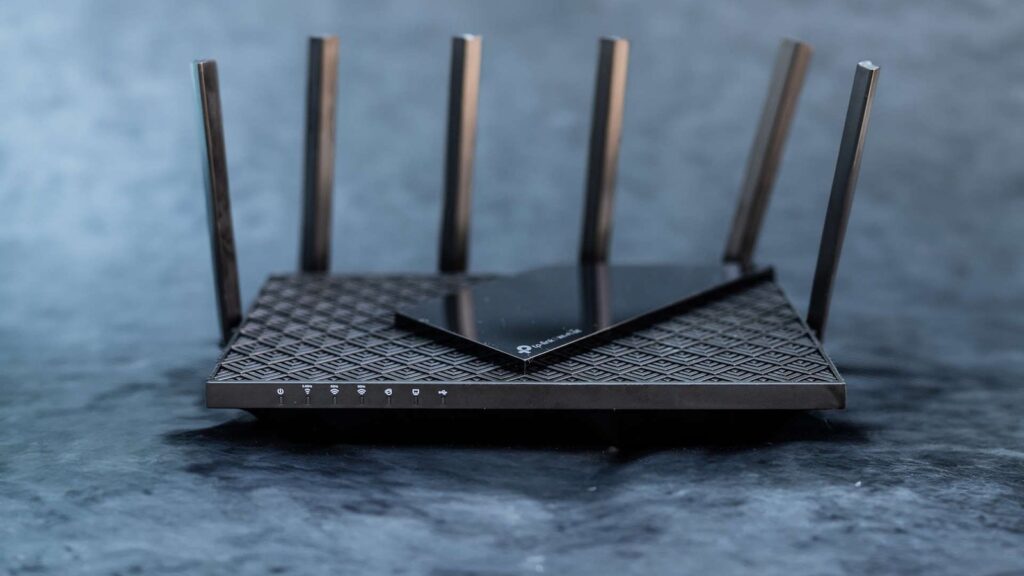
Earlier this year, the FCC announced that foreign-made routers would need to obtain special approval to be sold in the United States, effectively applying a kind of soft ban. The company’s statement that it plans to move router production to the U.S. shows that this has put enough pressure on TP-Link to make a significant change.
The Chinese company signed a letter of intent (LOI) with electronic manufacturer Key Tronic, which will support router assembly in Mississippi.
TP-Link’s CEO Jeffrey Chao said, “This letter of intent we signed with Key Tronic demonstrates our strong commitment to expanding advanced local production and our determination to make America our base for providing secure, reliable connectivity solutions to homes and businesses worldwide.”

Key Tronic CEO Brett Larsen stated, “Our manufacturing base will provide TP-Link with a strong local foundation, and our experience in high-reliability electronics manufacturing will help the company support the next generation of Wi-Fi 6 technologies.”
Yes, Wi-Fi 8 has arrived, and at its core, it focuses on improving reliability—for example, by reducing interference and latency. This is far more exciting than mere speed increases.
The apparent justification for the soft ban on foreign-origin routers was national security; after all, a compromised network infrastructure can pose a serious threat.
Nonetheless, since the Trump administration began imposing tariffs on certain imports and requiring companies to purchase from domestic producers, there has been a significant push toward domestic production overall. The U.S. government appears increasingly willing over the past one or two years to facilitate the large-scale reshoring of technology manufacturing to the United States.
These efforts are beginning to bear fruit; TSMC announced just a few months ago an additional $100 billion to be invested in U.S. chip manufacturing.
Of course, economic and security motivations are not mutually exclusive: promoting local production for economic benefit can also serve national security. In any case, TP-Link appears to be aligning with its strategy of shifting toward local production, and once production ramps up, this should make it somewhat easier to sell to US customers. Production, meanwhile, is expected to gain momentum in early next year.
Bu Gelişmeyi Toplulukta Değerlendirin
Haber hakkındaki düşüncelerinizi, donanım deneyimlerinizi ve teknik sorularınızı topluluk üyeleriyle anlık olarak tartışın.
Bu gelişme hakkında düşüncelerinizi, donanım deneyimlerinizi veya sorularınızı Topluluk Forumumuzda paylaşın.
Foruma Katıl & Yanıtla ➔






















Söz sizde.
Deneyiminizi, sorularınızı ve katkılarınızı paylaşın. E-posta adresiniz yayımlanmaz.